
2025-2026 Stroum Center Graduate Fellows
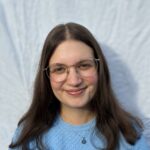 Chava Fisicaro
Mickey and Leo Sreebny Memorial Fellow
Chava is a Ph.D. student in Near and Middle Eastern Studies at the University of Washington. Originally from Milan, Italy, she completed her B.A. in Philosophy at Vrije Universiteit Amsterdam and her M.A. in Middle Eastern Studies at the University of Amsterdam. Her research interests include the Jewish communities of Italy, Libya, and Rhodes, and their relationship with colonialism, migration, and network building. Her M.A. thesis researched the participation of Italian Jewry in the Italian colonial effort in Libya and Rhodes through the study of Jewish press in Italian, Ladino, French, and Arabic from Turin, Rhodes, Tripoli, and Cairo. For her Ph.D. dissertation, she plans to investigate the role of Jews of Italian origin who settled in Ottoman Turkey and Greece in building transnational networks linking the Eastern Mediterranean and MENA (Middle East and North Africa) regions to Asian port cities and Western Europe. Outside of academia, Chava loves cooking Persian food, the Lord of the Rings, urban hiking, and dim sum.
 Ari Forsyth
Robinovitch Family Fellow
Ari Forsyth is a Ph.D. candidate in the Department of History, a teaching assistant for the Disability Studies program, and a (very proud and grateful) former recipient of the 2024-2025 Storum Center Jewish Studies Max Sarason Fellowship.
Ari studies race, gender, and disability in United States history, with an emphasis on Jewish migration, racialization, and the development of state and scientific power. Their research focuses on the political and scientific activities of ordinary women and girls, bridging histories of racial uplift, private philanthropy, professional social work, modern social science, urban policing, and eugenics in the early twentieth century United States.
Ari’s Ph.D. dissertation examines shifting relationships between whiteness, gender normativity, and disability in the evolution of modern social welfare systems, centering on the experiences of Jewish women and girls in US cities between 1880 and 1940. Drawing from critical studies of gender, race, and disability, they use archival evidence to explore how a growing network of Jewish social welfare institutions (immigrant aid societies, settlement houses, family casework agencies, juvenile courts, parole systems etc.) enabled an aspiring class of Jewish women to gain authority as social workers, while other groups of subaltern (poor and working class, disabled, gender non-normative) Jewish women and girls became the stigmatized subjects of their social work. Their dissertation sheds light on the previously overlooked significance of Jewish social workers in the history of the modern welfare state, uncovering crucial connections between American Jewish identity formation and the exercise of state and scientific power in the early twentieth-century United States.
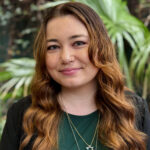 Sivan Komatsu
Ina & Richard Willner Memorial Fellow
Sivan Komatsu is a school psychology Ph.D. student in the College of Education at the University of Washington. She earned her BA in psychology and women’s, gender, and sexuality studies from Dickinson College in 2021 and her Ed.S. in school psychology from the University of Washington in 2024. Sivan has been involved in the Jewish community throughout her life, working with Jewish youth in Hebrew schools and community centers. As a school psychologist, Sivan is passionate about helping youth and families thrive amidst adversity. In August of 2023, Sivan began her school psychology internship at Northwest Yeshiva High School, where she implemented school-wide mental health interventions after October 7th. Inspired by her students’ strength, Sivan’s research interests shifted towards Jewish youth wellbeing. Her research examines predictors of resilience and life satisfaction among American Jewish adolescents – she hopes to use her findings to help Jewish families, educators, community leaders, and mental health professionals support Jewish teens amid rising antisemitism.
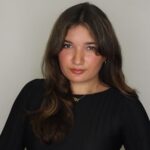 Anya Lord
Max Sarason Endowed Fellow
Anya Lord is a second-year M.A. student in Museology at the University of Washington’s iSchool. Her current research project explores how holocaust museums in the U.S. respond to the challenges of representing holocaust memory. Specifically, Anya is examining the intersection of discourses related to genocide, civic engagement, and contemporary politics. She is especially interested in specific and local interpretive strategies holocaust museums use to engage the public, approaches that typically strive to be ethnically responsible, historically grounded, and emotionally resonant. Anya holds a B.A. in art history, with minors in history and educational studies from Carleton College. When she’s not work, she can be found reading sci-fi and fantasy books, drinking Dr. Pepper or watching “bad action flicks” with her cat.
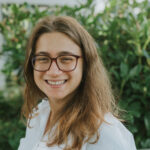 Alexandra Ritsatos
Robinovitch Family Fellow
Alexandra Ritsatos is a third-year Ph.D. student in history at the University of Washington. Her research delves into the dynamics of working-class Jewish Salonika with a particular interest in the relational dynamics that were present in the labor and leftist movements of the city. Alexandra is particularly interested in examining the political activism of working-class Salonikan Jewish men and women as well as their non-Jewish neighbors and the political visions they put forth within the context of their changing city following its annexation by the Greek nation-state from the Ottoman empire. For her Ph.D. dissertation, Alexandra hopes to explore political activism and belonging among marginalized groups in Salonika and examine the dynamics between Sephardic Jews, refugees from Asia Minor and Armenians, in the interwar Greek communist left.
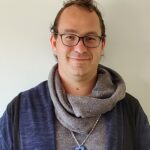 Micah Sprouffske
Ina & Richard Willner Memorial Fellow
Micah Sprouffske is a second-year Ph.D. student in Asian Languages and Literatures at the University of Washington, with an emphasis in Chinese linguistics focusing on the evolution of orthography and dissemination and use of Chinese characters to represent the phonologies of borrowed words. He completed his B.A. in anthropology, Chinese, and linguistics at the University of Oregon in 2011, focusing his educational pursuits on early writing systems, in particular working with Mesoamerican scripts and east Asian languages. He worked on an M.A. at Wuhan University in China in Chinese historical linguistics, where he studied early Chinese dictionaries and the historical perspectives of their own written evolution. Currently, he is interested in the linguistic adoption, by the Jewish immigrants to China during the Tang and Song dynasty, of Chinese characters to represent not only the transcription of Hebrew names and terms, but the selection of the characters used to directly represent Jewish ideals within a Chinese context, many of which appear to be directly adopted from the local Daoist tradition.
When not pursuing research, Micah spends his time working in education to support underprivileged youth. He conducted research in conjunction with Haifa University in language education in Haifa schools between 2022 and 2023. Micah has a passion for encouraging language education both for youth and adults alike as language helps bridge cultures. He especially encourages and is interested in the language education and preservation of endangered and decayed languages, where revival is hindered by limited community or a lack of resources.