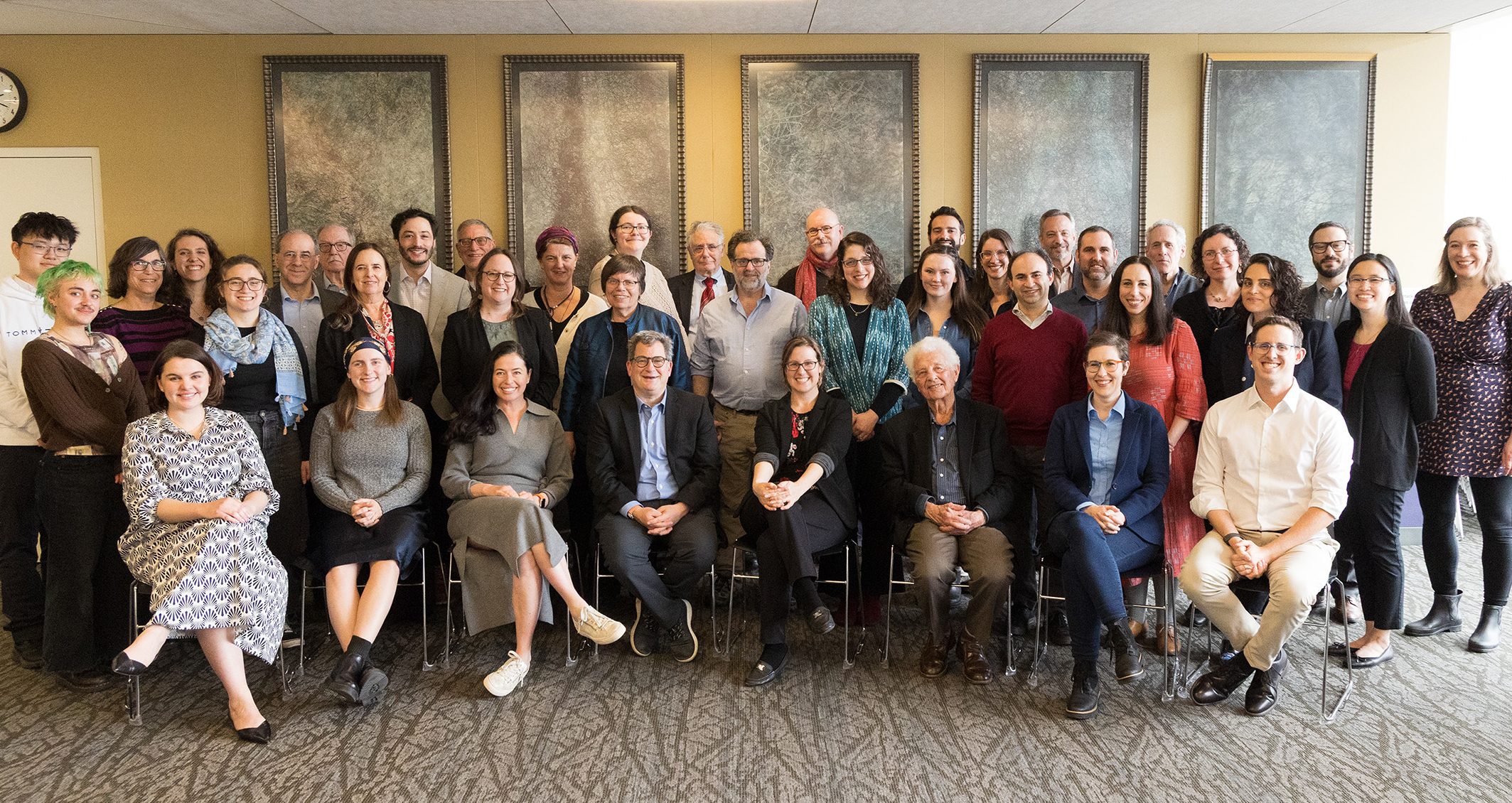
Stroum Center faculty, graduate students, and staff, past and present, on March 11, 2025
“The [Stroum] Center’s work is more important now than ever… It creates the space for courageous, fact-based conversations. We talk about creating safe spaces, but we also need brave spaces for our students, because the challenges of the world require you to have courage… That starts right here.”
— Ana Mari Cauce, President, University of Washington
The impact of the UW Stroum Center for Jewish Studies’ half-century of work was on display on March 11, 2025. Over the course of the day, 300+ people came together to celebrate the Center’s lasting impact and share their personal and professional experiences and memories. Some key highlights:
Morning panels: 50 years of impact on campus and beyond
The morning began with a series of panels highlighting four major accomplishments of the Center over the years. To help offer perspective and ground our conversations, over forty visiting scholars — former faculty, Stroum Lecturers, and post-doctoral fellows — were invited to come mark this milestone with us. Many of these visitors participated in the morning panels.
Panel 1. Engaging the public: The legacy of the Stroum Lectures
For more than fifty years, the nationally renowned Stroum Lectures series has served as a keystone to the Center’s community programming. Made possible by the generous financial support of Samuel and Althea Stroum, these lectures bring Jewish studies luminaries from around the globe to Seattle for an impactful series of lectures. A corresponding book published by the University of Washington Press helps expand the reach of these lectures to a broad audience. This panel featured two former Stroum Lecturers, who discussed the impact this experience had on their careers. Read a full recap of the Stroum Lectures panel.
Moderator
Sasha Senderovich, University of Washington
Participants
Ruth Behar, University of Michigan
Anita Norich, University of Michigan
Sasha Senderovich: “Of all the things that I find really important at this job, especially my connection to the Stroum Center, I find the Stroum Lectures to be the most important legacy to cherish. But also a series to continue.”
Anita Norich: “I have to say, this series of lectures and the book that came out of it was literally — and I’m not exaggerating here — the most productive experience I have had as an academic.”
Panel 2. Launching the next generation of scholars with the Cole and graduate fellowships
Since its inception, the Hazel D. Cole Fellowship program has provided funding assistance to deserving doctoral or postdoctoral fellows furthering their scholarship in Jewish studies.
Typically designated for two years, this funding may be used as a dissertation completion fellowship or post-doctoral work. Additionally, the Stroum Center graduate fellowship offers grants for graduate students while also building a cohort of peers helping to further their Jewish studies knowledge. At the same time, fellows are provided professional development and research advice and mentorship from faculty and staff. This panel brought together recipients of these funding opportunities to discuss the impact that being at the UW and the Stroum Center had on their careers.
Moderator
Sarah Zaides Rosen, University of Washington
Participants:
Michael Alexander, University of California, Riverside
Charlotte Elisheva Fonrobert, Stanford University
Benjamin Lee, University of Washington
Michael Alexander: “The thing that was really lovely about the program — you introduced us to department meetings. In other words, I’d never sat in a department meeting before. I saw what it was like from the inside. You welcomed us as basically faculty in training, and you learn a lot. The number one thing I learned is that everyone, in terms of their own research, was still following their curiosity… It was a good place to be, a good place to think, and there was a lot of mutual support.”
Panel 3. Creating an institutional mark on the UW campus: Honoring our faculty trailblazers
This panel brought together some of the first faculty that worked to build the Stroum Center’s robust Jewish studies programming. Together they discussed some of the early roadblocks as well as the notable achievements of the Center, while also allowing us to celebrate their decades of work.
Moderator
Noam Pianko, University of Washington
Participants:
Paul Burstein, University of Washington (Emeritus)
Hillel Kieval, Washington University (Emeritus)
Joel Migdal, University of Washington (Emeritus)
Sarah Abrevaya Stein, University of California, Los Angeles
Sarah Abrevaya Stein: “When I arrived in 1999, I was hired between the history department and the Jackson School, with an office situated in the Jackson School. This, for me, was a tremendous blessing. I thought the vision to place Jewish Studies into an interdisciplinary unit focused on globality, on connectedness, on regional studies, was very visionary. I felt intellectually quite at home in that environment because my own work was transnational and moving towards an increasingly global frame.”
Panel 4. Shaping the future of Sephardic Studies: A decade of scholarship, global engagement and cultural preservation
While only ten years old, the UW Sephardic Studies Program has become a global leader in the study of Sephardic Jewry. Panelists discussed what has helped propel the program to success, as well as the impact it has had on the Seattle community. Read a full recap of the Sephardic Studies panel.
Moderator:
Devin E. Naar, University of Washington
Participants:
Canan Bolel, University of Washington
Jonathan Decter, Brandeis University
Makena Mezistrano, Stanford University
Hannah Pressman, Hebrew Union College-JIR Jewish Language Project
Hannah Pressman: “As far as the trail Sephardic Studies has blazed in public programming, I absolutely think UW Sephardic Studies and its public programming and engagement have changed the conversation about Jewish identity in the US and globally, and have fed and led the resurgence of public interest in Ladino in recent years. So everyone who’s been involved is to be commended. I really think that through online programs and in-person events, the Sephardic Studies Program has made visible and rendered seen the academic field of Sephardic Studies in a pretty remarkable way, and that we’ve put this campus and the local Sephardic community and Seattle on the map as a locus of Sephardic history and culture.”
Evening talk: Today’s campus conflicts and the future of Jewish Studies
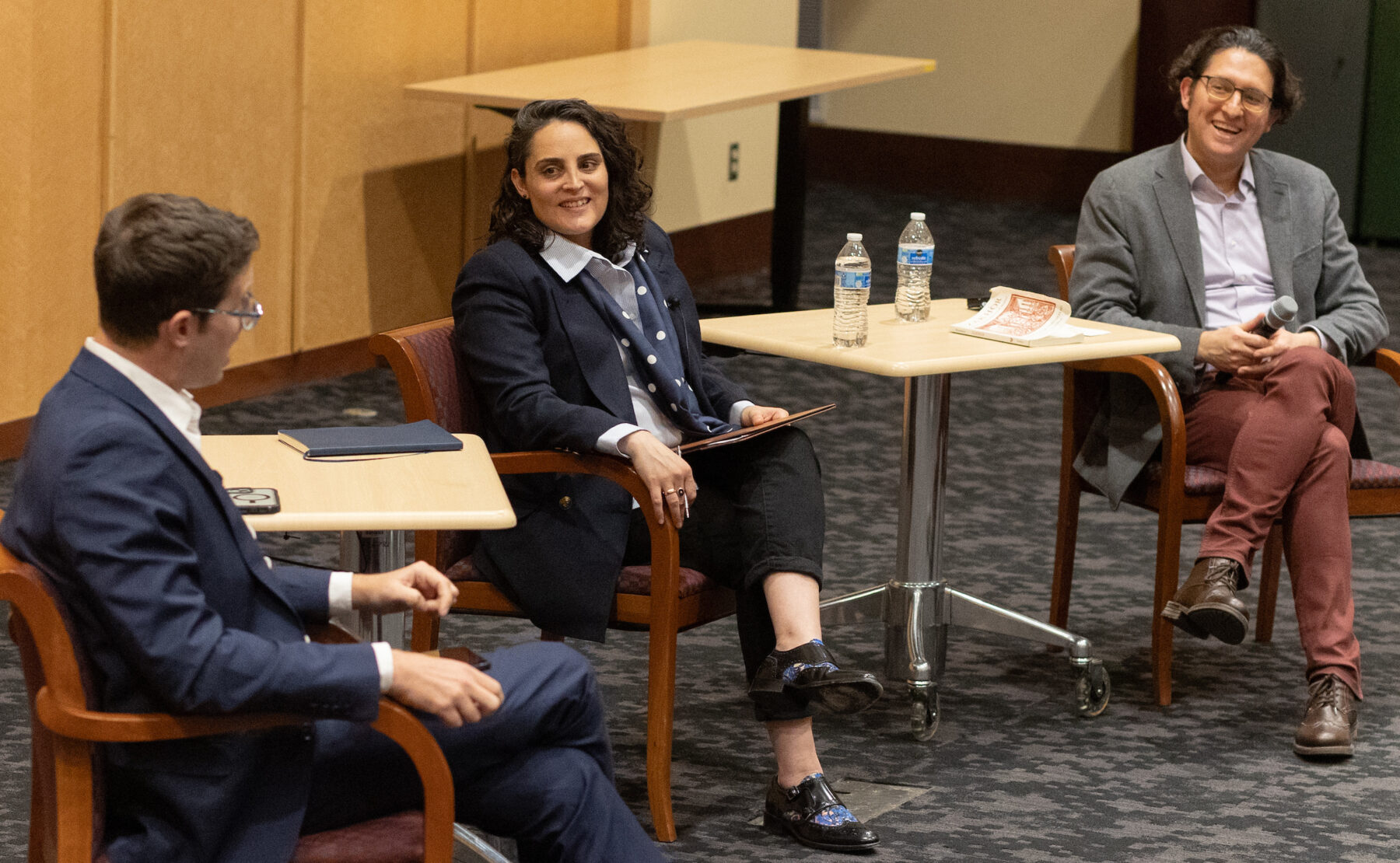
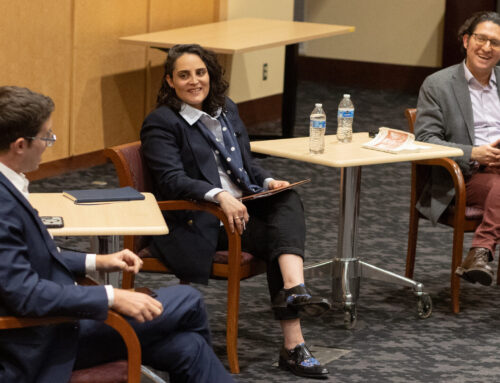
Daniel Heller, Gilah Kletenik and Devin E. Naar discuss Jewish studies in today’s climate on March 11, 2025
While much of the day was spent reflecting on the past, our 50th anniversary celebration concluded with an evening discussion focused on the current moment Jewish studies programs find themselves navigating.
Current faculty Devin E. Naar and Gilah Kletenik, along with moderator (and former Cole fellow) Daniel Heller, shared their personal experiences while drawing on important historical moments to help frame this conversation and current moment.
Read an edited transcript of this discussion or listen to the recording.