
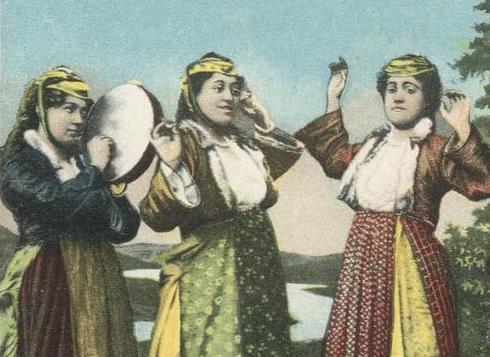
Dancing Salonican women in traditional Jewish dress. Source: WikiCommons.
Summary:
- While popular Jewish discourse suggests that Jews don’t have baby showers, Sephardic women have been hosting baby showers for centuries.
- This celebration is known in Ladino as a kortar fashadura.
- At a kortar fashadura, women sewed clothes for the newborn and sang Ladino songs known as kantikas.
- These kantikas were preserved in a song book and organized by musical mode known as makam.
- This festive celebration was linked with another life cycle celebration before death known as the kortar mortaja.
Do Jews have baby showers?
As American mothers-to-be in the 1940s began to celebrate the first modern-day baby showers, igniting a trend that is widespread today, did Jewish women also participate? Perhaps not: Jewish blogs and online forums — even American rabbis — attest today that “Jews don’t have baby showers.” A baby shower, they say, may provoke the evil eye, or in Hebrew, ayin ha-ra, (and in Ladino, ojo malo or ayinara), which could bring harm to the mother and her unborn child.
But a custom popular among Sepharadim challenges this assumption and suggests that over the generations Jews did celebrate a baby shower of sorts. A gathering known as kortar fashadura (cutting the swaddling cloth) was common throughout the Ottoman Empire and was primarily preserved through the unique ballads sung at this festive occassion.
What happened at a kortar fashadura?
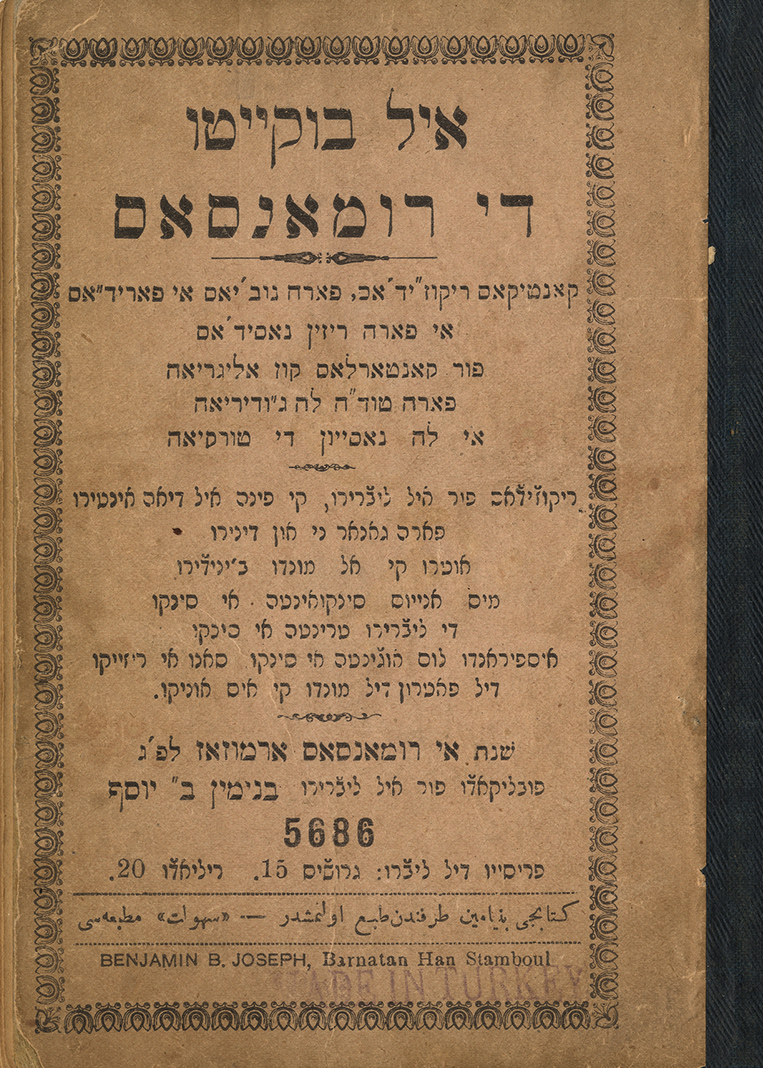
Title page of El bukyeto de romansas (Istanbul, 1926), a Ladino song book that includes kantikas for brides and new mothers
The kortar fashadura was a festive environment: The primary activity at the celebration was to sew the newborn clothes, which eventually amounted to an elaborate layette. As women stitched and created together, they also sang — from memory — Ladino songs, or kantikas, about childbirth and love.
Much like baby showers today, the kortar fashadura was held in the home and usually only attended by women. It was one of many celebrations associated with childbirth among the diverse communities in the Ottoman Empire, such as the babinden, a festival in honor of midwives practiced by Bulgarian Orthodox Christians, and the aqiqah, a feast held seven days after a baby is born in Islamic communities.
Preserving the kortar fashadura in a song book
As political, cultural, and demographic transformations in the late nineteenth and early twentieth century began to erode traditional practices like the kortar fashadura, community leaders published the lyrics of the oral songs so that they would continue to be used and preserved for posterity. One such booklet, called El bukyeto de romansas, (published in Istanbul in 1926), collects 32 songs to be sung for brides and new mothers — a sign of the traditional expectations placed upon women.