

Stroum Lectures 2026 with Rafael Neis
Tuesday, May 12 - Thursday, May 14
The Stroum Center for Jewish Studies is proud to announce our 2026 Samuel and Althea Stroum Lecture series, featuring Professor Rafael Neis from the University of Michigan.
Both events are free and open to all. Please register here: Registration Required
Lecture 1: Have ‘Men’ and ‘Women’ Always Existed? What the Talmud Can Tell Us
May 12, 7:00-9:00pm, UW campus – register for location
We often assume that the categories “man” and “woman” are stable and self-evident. Indeed, ideas about the timelessness of gender may also underpin the refrain that “trans and nonbinary people have always existed.” This framing asks us to support the right of contemporary gender-diverse people to exist and flourish, in part, by recognizing that they, too, have an ancient lineage. In this talk, Professor Rafael Neis presents an altogether different approach to gender. Through a journey into Talmudic texts composed in late ancient Iraq, they invite us to set aside what we think we already know about gender categories. Doing so, Professor Neis argues, will illuminate how the ancient rabbis sought to invent, classify, and make meaning of the diverse plurality of human and other beings.
Lecture 2: Monsters, Hybrids, and Holy Images – Rethinking Bodies in Ancient Jewish Art
May 14, 4:00-5:30pm, UW campus – register for location
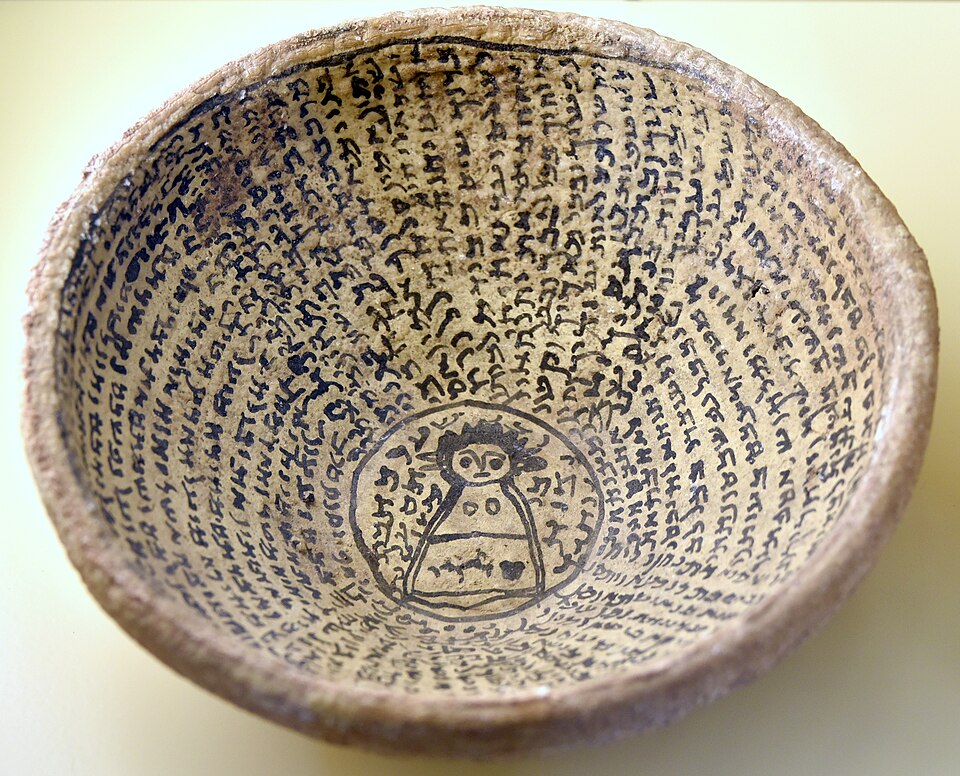
Walk through the ancient Mediterranean and Middle East, and you would have been surrounded by images of all kinds—human figures, animals, hybrids, and creatures that blur the line between the familiar and the fantastic. These images appeared everywhere: in streets and homes, bathhouses and synagogues, public buildings and sacred spaces. Art historians have traditionally taken upon themselves the role of assigning gender or species designations to such images in ways that replicate modern gender and sexuality concepts (especially of “male” and “female” or “masculine” and “feminine”). In this talk, Professor Rafael Neis explores a handful of examples from late ancient Jewish art in the Roman Galilee and Sasanian Iraq. Instead of sorting these images into boxes like “human,” “animal,” or “hybrid,” or even “male,” “female,” and “queer,” they invite us to see the complex ways in which ancient artists and communities imagined species, divinity, and gender. The result is an account of ancient Jewish visual culture that offers a more expansive representation of kinship, difference, and the sacred.
About the Speaker
Rafael Neis is a scholar and artist. Neis is the Jean and Samuel Frankel Professor of Rabbinic Literature and is appointed in the Department of History and Frankel Center for Judaic Studies at the University of Michigan. As Faculty Director of Arts Learning at Michigan’s Arts initiative, Neis supports campus-wide art-integrated pedagogy. Their second book, When a Human Gives Birth to a Raven: Rabbis & the Reproduction of Species, was published in 2023 by University of California Press. Their artwork has been featured in shows and in many publications.
The Stroum Lectures in Jewish Studies is a nationally-renowned series of public lectures, which has brought Jewish studies luminaries from around the globe to the University of Washington for more than fifty years. Made possible through the support of the Samuel and Althea Stroum Lectures Endowment, this annual series is a cornerstone program of UW’s Stroum Center for Jewish Studies and has led to impactful conversations, groundbreaking scholarship, and award-winning publications. You may view the full Stroum Lectures archive here and review corresponding books published by University of Washington Press here.
Image: 4th-7th c. incantation bowl written in Aramaic from Iraq. Photo by Osama Shukir Muhammed Amin via Wikimedia Commons.