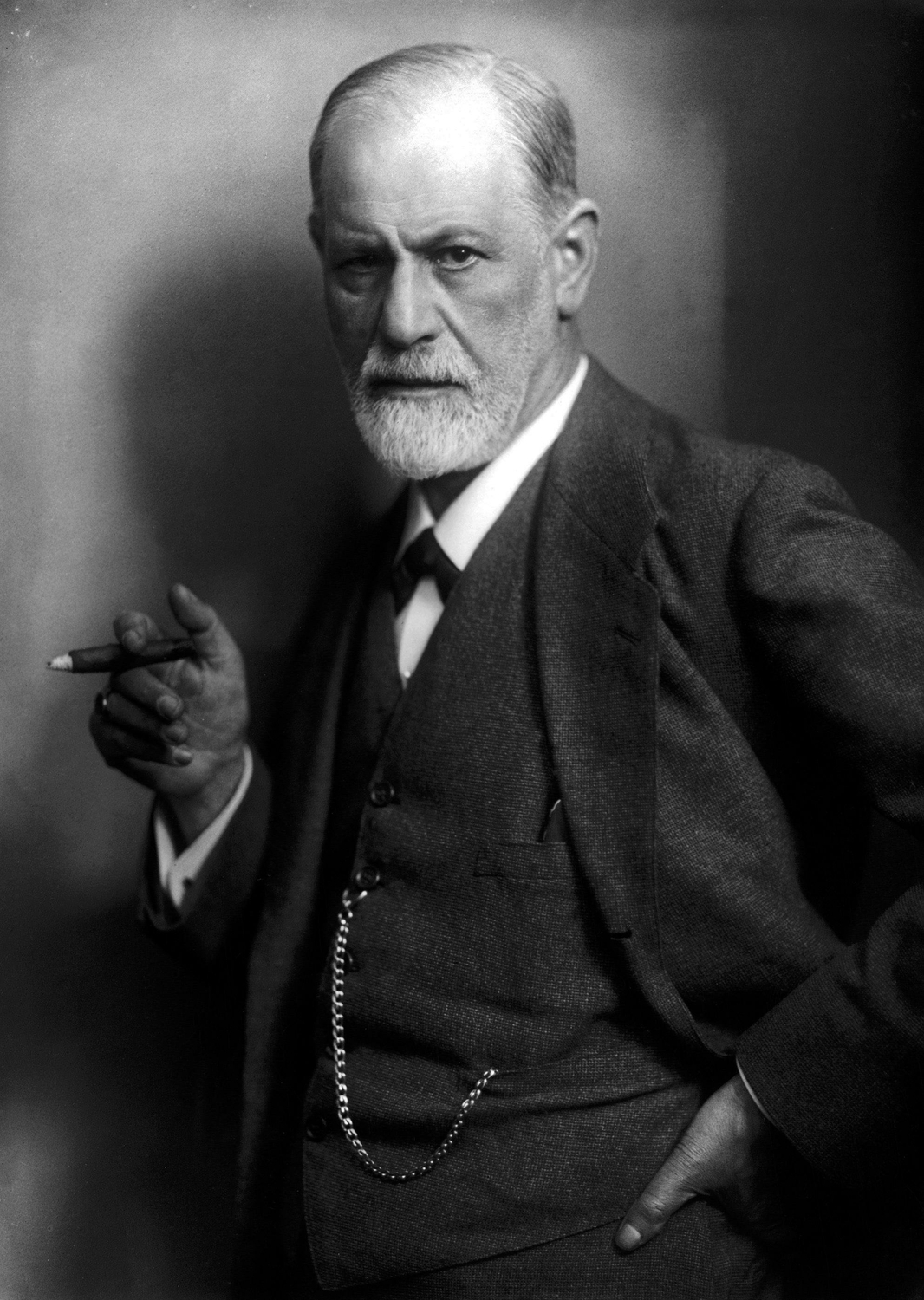
Sigmund Freud, circa 1921, Wikimedia Commons
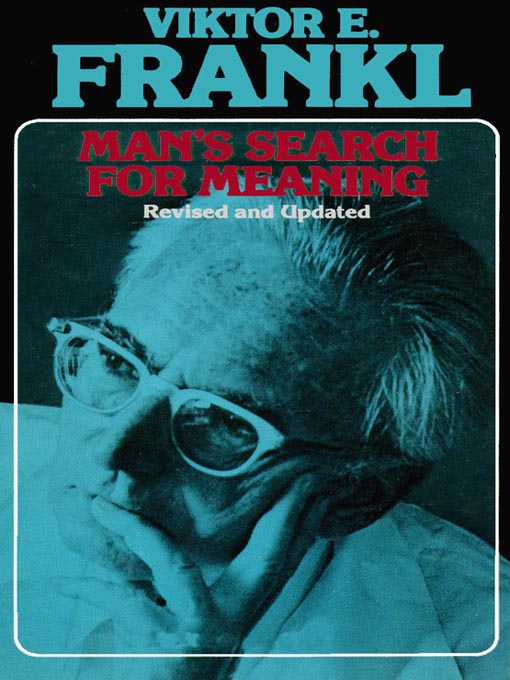
Cover Image of Man’s Search for Meaning, by Victor Frankl, Frankl’s book documents his story of Holocaust survival and introduces logotherapy.
Sivan Komatsu
Mental health resources for the Jewish community:
In 1930, Sigmund Freud wrote that he was “in his essential nature a Jew”. Freud, often referred to as the “father of psychology,” wrote extensively about his Jewish identity and its influence on his work. His colleague, Alfred Adler, founder of individual psychology, was born to Hungarian-Jewish parents in a suburb of Vienna, Austria. Kurt Lewin, German-Jewish founder of social psychology, devoted much of his career to studying Jewish identity, belongingness, and education. Holocaust survivor Viktor Frankl founded logotherapy, also known as “healing through meaning,” which many argue is aligned with Jewish thought. Abraham Maslow, founder of humanistic psychology and developer of “Maslow’s hierarchy of needs,” was born to Jewish parents who fled from Russian persecution; growing up, he was often the target of antisemitic gang violence. Cognitive behavioral therapy, widely regarded as the “gold standard” of psychotherapy, was developed by Aaron Beck, an American Jew with Ukrainian immigrant parents.
While these scholars varied greatly in their theories and practices, they have two notable commonalities. First, they all had profound influences on the field of psychology. Second, they were Jews whose Jewish identities impacted their work in varying degrees. The latter is often ignored, and the impact of their Jewish identities and experiences of antisemitism – including fleeing Nazi-occupied Europe and surviving concentration camps – are overlooked. The systemic, often racialized nature of antisemitism remains misunderstood as age-old conspiracy theories about Jews, power, and influence continue to shape discussions in both subtle and overt ways within professional communities. Psychology – a field strongly shaped by Jews – is grappling with a severe antisemitism problem that, for many, was illuminated after October 7th, 2023. The field’s responses to the deadliest massacre of Jews since the Holocaust have sparked anxiety, distrust, grief, and anger for Jewish psychologists around the world.
Responses to October 7th
Just days after the Hamas-led terror attacks of October 7th, 2023, while Israel was still counting its dead and missing, an American Psychological Association (APA)-affiliated organization described the attacks as a “decolonial struggle for justice.” APA-hosted listservs sent emails including statements such as “kudos to Hamas” and “intifada, intifada.” The APA – the largest psychology association in the world – is currently under federal investigation for antisemitism. In Chicago, 26 Jewish therapists found themselves on a Zionist “blacklist” to avoid referring clients to. Some had never identified themselves as Zionist – they simply had Jewish-sounding names. Professional conferences, designed to share knowledge and build community, have become sites of significant tensions around antisemitism and Zionism. One anti-racism presentation described Zionism – the belief in Jewish self-determination in the Jewish indigenous homeland – as part of “the colonized mind,” akin to fascism, white supremacy, and rape culture. Another, in its abstract, described October 7th as “attacks against [the Gaza Strip’s] military targets.” In reality, 73% of those murdered in the attacks were civilians, ranging from 14 hours to 92 years old.
Multiculturalism and Jews as White
Mental health professionals have increasingly embraced multiculturalism, which emphasizes the role of culture and identity on mental health. Clinicians are taught to critically examine their own biases, reflect on their identities and experiences, and learn about their clients’ cultural backgrounds. Multicultural therapy also stresses the impacts of discrimination and oppression on the mental health of individuals and communities, encouraging clinicians to fight for a more just world for all. While this paradigm is vital to making mental healthcare more equitable and effective for diverse client populations, it often falls short when it comes to Jews.
Jews are often framed as white, leading to exclusion from discussions and education on multicultural practice. While many Jews are perceived as white in certain contexts, framing Jews as simply a subcategory of white Americans dismisses the marginalization and minoritization of the Jewish people. Jews “don’t count” as a minority, and therefore, multiculturalism and social justice frameworks don’t apply. These frameworks frequently employ Western constructions of race and the white/person of color binary, neither of which account for the complexity of Judaism, an ethnoreligion that has historically been racialized. Ironically, forcing modern Western racial categories on a millennia-old people mimics the same colonial power dynamics being advocates against. Perhaps the clearest example of this phenomenon in the field of psychology was a February 2026 statement by the Coalition of National Racial and Ethnic Psychological Associations (CONREPA). CONREPA, which represents approximately 2,000 members, urged the APA not to recognize the Association of Jewish Psychologists as an Ethnic Psychological Association because, in their words, most Jews in the United States “identify as white,” and formal Jewish representation in the APA was therefore not needed.
Where Do We Go from Here?
As Yair Rosenberg, staff writer at The Atlantic, says, antisemitism “is not merely a social prejudice; it is a conspiracy theory about how the world operates”. Rather than “punching down” like other forms of hatred, antisemitism is often seen as “punching up” to a powerful, privileged group. Jews are framed as white, and therefore, privileged. Jews’ disenfranchisement is overlooked, despite being disproportionately targeted by hate crimes – despite comprising approximately 2.4% of the US population, Jews were victims of 63% of the country’s religiously-motivated hate crimes in 2025. If the mental health field is to effectively address its antisemitism problem, it must teach its students and professionals how antisemitism operates. This requires more than simply adding antisemitism to generic statements about hatred and bigotry. It requires teaching students and professionals to identify covert antisemitism and antisemitism within their own social circles. It requires the community to examine their biases, some of which may have been reinforced in their own training. It requires a comprehensive understanding of not just antisemitism, but also Jewish identity. Training programs and professional organizations must meaningfully engage with the Jewish community to teach mental health professionals about Jewish identity as an ethnoreligion – one that is diverse, resilient, marginalized, and complex. Multicultural therapy frameworks must expand to account for identities that do not fit neatly into Western racial categories, including the Jewish people.
Just as the field of psychology has acknowledged and worked to repair harm it has caused to other communities, it must do so for Jews. True progress requires the field to grapple with the pain it has caused Jewish students, trainees, clinicians, and clients. Perpetuating antisemitism, invalidating Jewish experiences, misrepresenting Jewish identity, and excluding Jewish professionals have real-world consequences on the mental health of the Jewish community. The painful irony of a field profoundly shaped by Jewish thinkers failing to make space for Jews today is difficult to ignore. If the field of psychology is to remain committed to justice, dignity, inclusion, and healing, it must confront antisemitism with the same tenacity as other forms of hatred and expand its understanding of Jewish identity beyond Western racial frameworks – and of course, it must never forget its roots.

Sivan Komatsu, an Ina & Richard Willner Memorial Fellow, is a school psychology Ph.D. student in the College of Education at the University of Washington. She earned her BA in psychology and women’s, gender, and sexuality studies from Dickinson College in 2021 and her Ed.S. in school psychology from the University of Washington in 2024. Sivan has been involved in the Jewish community throughout her life, working with Jewish youth in Hebrew schools and community centers. As a school psychologist, Sivan is passionate about helping youth and families thrive amidst adversity. In August of 2023, Sivan began her school psychology internship at Northwest Yeshiva High School, where she implemented school-wide mental health interventions after October 7th. Inspired by her students’ strength, Sivan’s research interests shifted towards Jewish youth wellbeing. Her research examines predictors of resilience and life satisfaction among American Jewish adolescents – she hopes to use her findings to help Jewish families, educators, community leaders, and mental health professionals support Jewish teens amid rising antisemitism.