Dear Sephardic Studies supporters,
The first director of Sephardic studies at an American university, Maír J. Benardete, at Columbia University, observed in the 1930s in an essay for the Ladino newspaper, La Vara, that contemporary life was like a “tempestuous sea” that required careful navigation. For Sephardic Jews who came to the United States a century ago from the lands of the Ottoman Empire, their story of navigation was compounded by the fact that they often did not fit the categories according to which Americans organized the world: were these newcomers Jews? If so, why didn’t they speak Yiddish and instead a language that sounded like Spanish (i. e. Ladino) — were they Mexicans or Puerto Ricans? Why did they come from the Muslim world and gesticulate like Italians? Were they European or Middle Eastern? White or brown?
In today’s world, when our public discourse is frequently framed through Manichean dichotomies — one must fall into either this category or that category — the field of Sephardic studies helps us grapple with some of the complexities and contexts that have shaped the human experience in the past that can also help us analyze the present in all its messiness.
The Sephardic Studies Program at UW strives to do just that through its public programs, digital and library projects, teaching, and graduate student research.
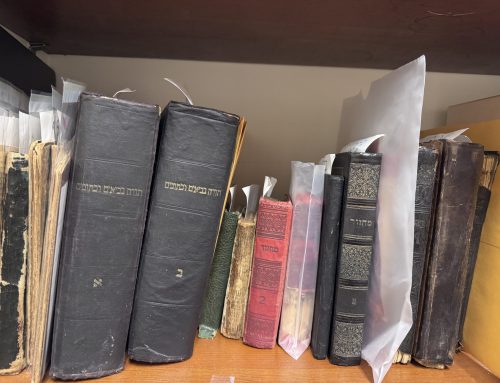
We are excited that this coming Ladino Day, on January 10, 2027, UW Libraries Special Collections will be hosting us as we delve into one of the largest privately owned collections of Ladino books in the country recently gifted to the libraries. Istanbul native and Seattle local, Albert Adatto, amassed this unique trove on texts from the Ottoman Empire and Europe starting when he, and his sister Emma, were pioneering graduate students at the University of Washington in the 1930s. The range of genres – from religious texts and ethnical commentaries to novels and political manifestos, missionary tracts and schoolbooks — reflect the multifaceted cultural creativity among Sephardic Jews over the generations. Come see these treasures on display, discover the worlds they open up, and learn how to access them in digital format through a new online portal. And don’t miss out on some delectable Sephardic treats at the reception afterwards! For details and to RSVP to Ladino Day, see here.
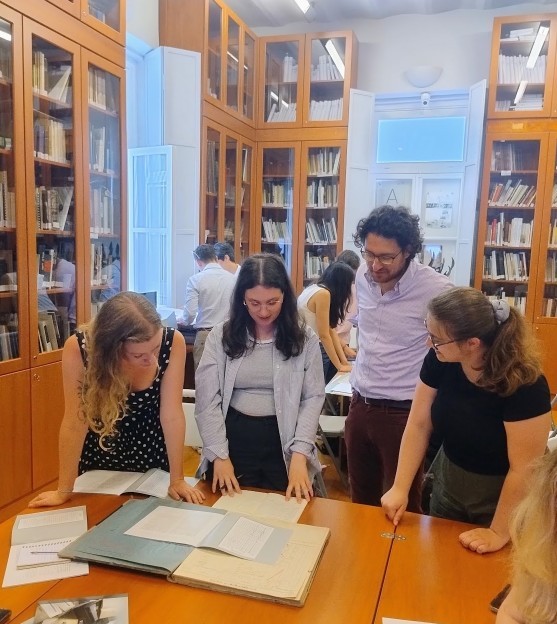
Colleagues Dr. Ben Lee in the iSchool, who directs the Lab for Computing Cultural Heritage, Hannah Beilinson and Toni Heilman, both MLIS students, and Dr. Julie Tanaka, associate dean for Distinctive Collections at UW Libraries, have played essential roles in advancing these projects.
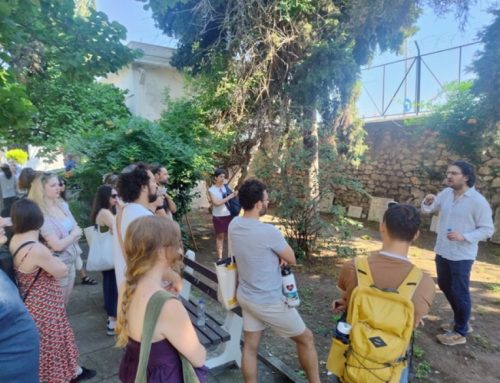
Sephardic Studies at UW not only helps to decrease the distance between the past and the present, but also between our location in the Pacific Northwest and geographies around the world. In the summer of 2026, three of our graduate students (Sasha Ward, Alexandra Ritsatos, and Chava Fisicaro) joined more than a dozen others as we returned to a place of great significance to Sephardic history and Ladino culture for an unprecedented Summer Institute on Sephardic history — in Salonica (Thessaloniki) Greece. For me, the institute was of extra special significance as it provided me with an opportunity to bring my children to see the city where our ancestors lived for nearly a half-millennium. Read about the Summer Institute here.
We’re also proud to be bringing the latest scholarship in the study of North African and Middle Eastern Jewish history to UW’s campus as Sephardic Studies will be co-sponsoring the next conference of Cal JeMM, which gathers faculty and graduate students from the west coast to share their latest research in the fields of Sephardic and Mizrahi studies. My colleagues, Drs. Liora Halperin and Canan Bolel, are the main organizers. See here for more details.
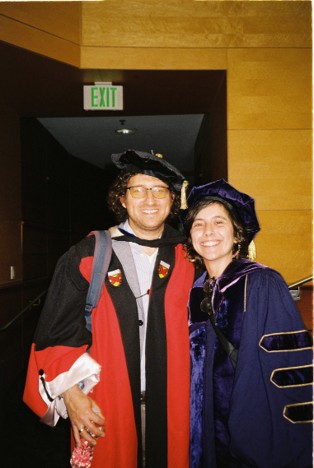
Of our excellent cohort of graduate students, Dr. Oya Aktaş successfully defended her dissertation in the History Department over the summer: “Jews and Armenians Between the Ottoman Empire and the Turkish Republic: Relationality, Violence, and Survival (1896-1928).” Awarded the prestigious dissertation completion fellowship from the Association for Jewish Studies, Dr. Aktaş drew on research in three continents and in several languages— Ladino, Turkish, Armenian, and French — to open up completely new perspectives on the interconnections between the fates of Jews and Armenians in the twilight of the Ottoman Empire. You can get a taste of some of her work here and here. During her time at UW, I was constantly reminded about the best part about working with graduate students: you get to learn from them! Mazal alto ke tenga!
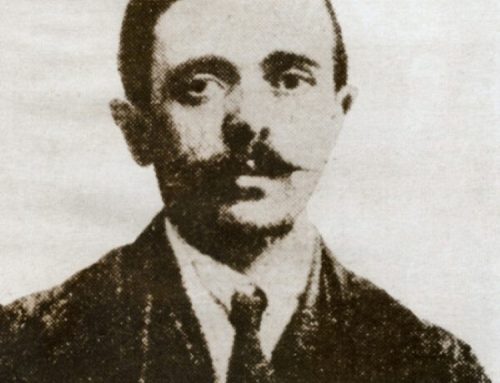
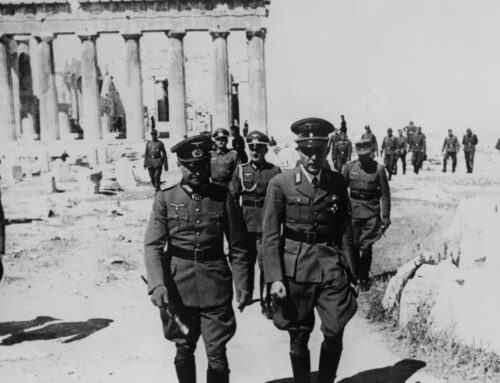
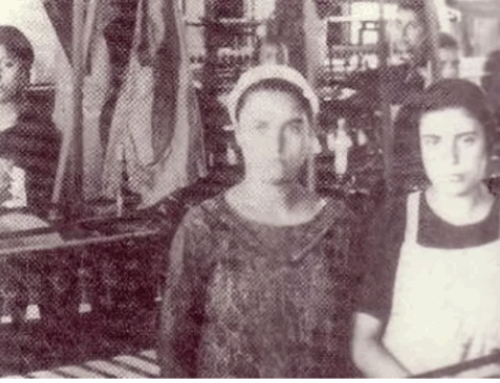
And that learning continues apace! This past year several graduate students working in Sephardic Studies served as Jewish Studies graduate fellows. You can read about Joana Bürger’s work on the Nazi occupation of Greece; Alexandra Ritsatos’s excavation of Jewish participation in radical politics in Greece, including the role of an important but long-forgotten Jewish woman and labor organizer; and Chava Fisicaro’s exploration of a prominent Baghdadi Jewish family that made a major imprint in Hong Kong. This coming year, MLIS student Hannah Beilinson will serve as a graduate fellow and delve further into her work on the Sephardic Studies digital collections.
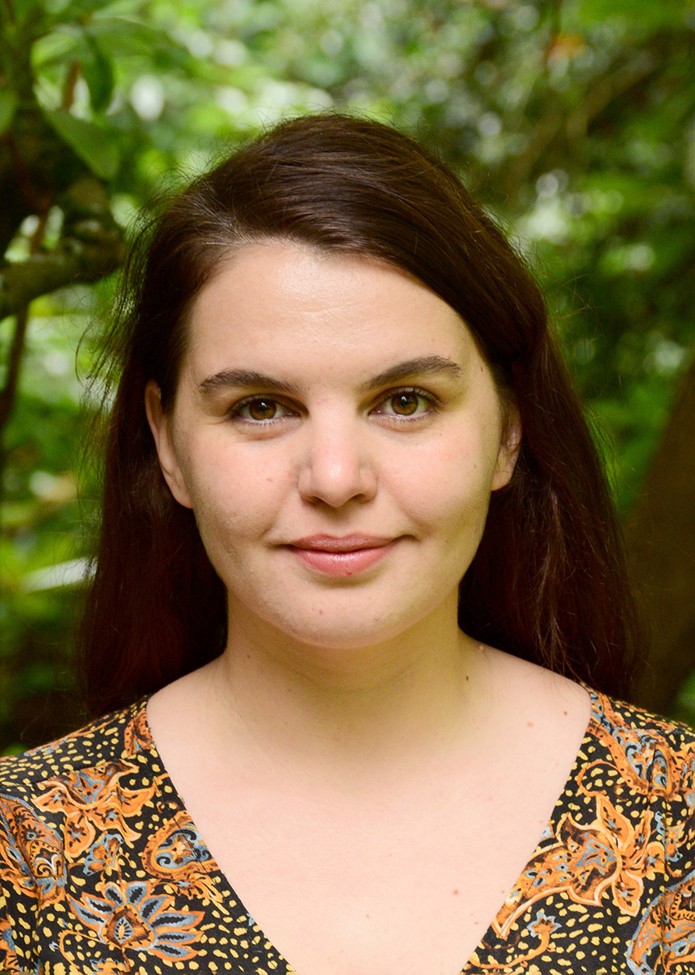
Our faculty continue to advance their research, too, including through collaborative projects. Dr. Canan Bolel recently received a major fellowship from the National Endowment for the Humanities with colleague Dr. Marina Mayorski at Oberlin to create an anthology of translated texts from American Ladino journalists. And together with Dr. Mayorski and Dr. Devi Mays at Michigan, I am at work on creating an anthology of Ladino novels from the Ottoman Empire translated into English, to be accompanied by bilingual audio books, in collaboration with Ayin Press and the Sephardic Foundation on Aging, both in New York. These will be the first Ladino novels that will be made readily available in English — ever!
In addition to teaching her courses on Ladino literature and language, Dr. Bolel has also been active with younger students. This past academic year, she hosted a group of students from local Jewish schools who came to campus to learn from Dr. Bolel about Ladino language and culture; a new crop of students from the same schools will be back again this fall to benefit from Dr. Bolel’s expertise.
If defying easy classification, crossing borders, and linking languages are among the hallmarks of the Sephardic experience, and the focal points of Sephardic Studies, you are going to want to check out two additional upcoming events that Sephardic Studies is happy to be cosponsoring. One of the most prominent literary translators in the United States, Dr. Aron Aji at Iowa will be visiting campus to speak about how growing up in a multilingual home in Istanbul — where Ladino, Turkish, French, and Hebrew swirled around—shaped his approach to translation. See details for Mother Tongue in Another Tongue.
And finally, the Ladino musician Guy Mendilow will be back in the area to present a new collaboration with Massachusetts Inaugural Poet Laureate Regie Gibson entitled, “Different Ships, Same Boat” that will weave together music and spoken word poetry, the Sephardic experience and the African American experience, and more. See details here.
The work of Sephardic Studies would not be possible without the tremendous support of the staff and leadership in both the Stroum Center for Jewish Studies and the Jackson School of International Studies. The generosity of the public is also key. A special thank you to the Sephardic Studies Sustainers Circle, including Joel and Maureen Benoliel, Harvey Sadis and Harriett Cody, and Harry Caraco, as well as the Lucie Benveniste Kavesh Memorial Fund and the Jack Zaraya and Wendy Sabin Endowed Fund in Sephardic Studies, plus the many individual contributions made locally and across the country that make what we do possible and successful—despite the “tempestuous sea” we are navigating these days.
Anyada buena! Pujados i non menguados!
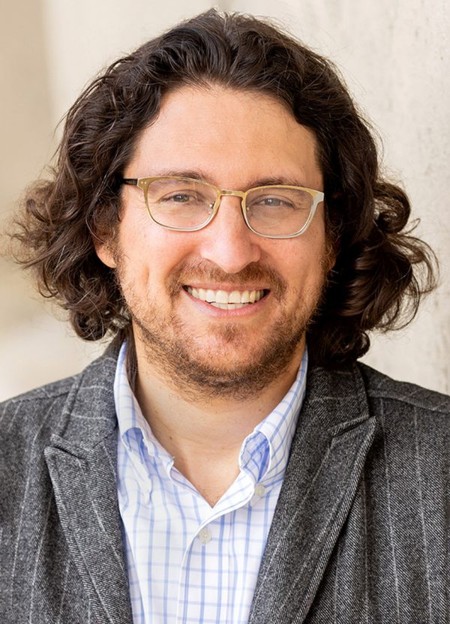
Dr. Devin E. Naar
The Isaac Alhadeff Professor in Sephardic Studies
Associate Professor, Stroum Center for Jewish Studies & Dept. of History