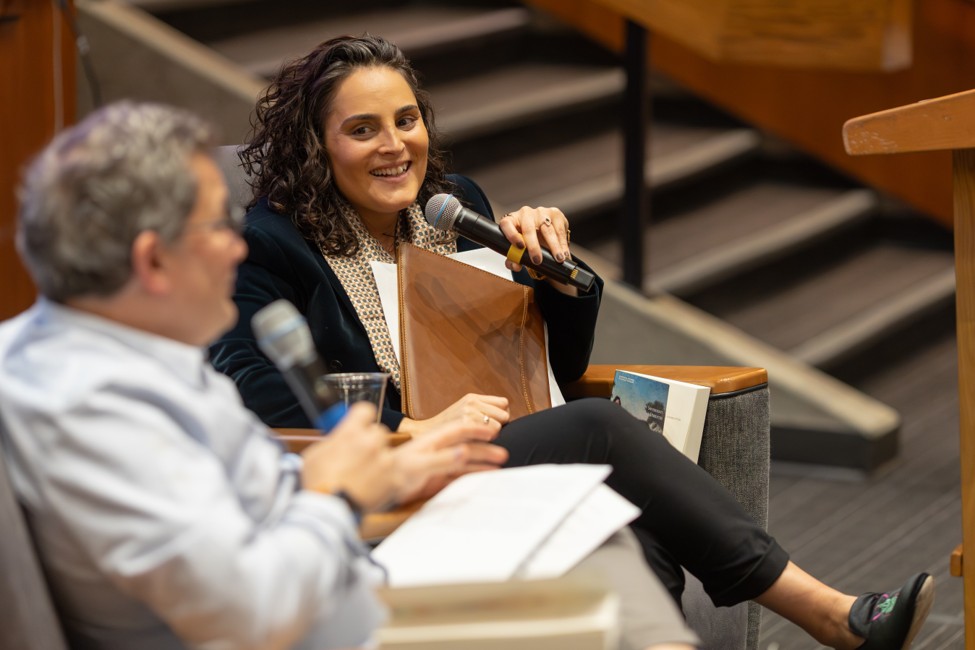
Gilah Kletenik and Noam Pianko in conversation. Image courtesy of Meryl Schenker Photography
The Stroum Center for Jewish Studies has long been an academic leader on campus and within the field of Jewish studies. In addition to producing high-quality public lectures and the University of Washington Press’ Samuel and Althea Stroum Lectures in Jewish Studies series, our faculty are known for their cutting-edge scholarship and publishing books that influence their broader fields.
This year, the Stroum Center for Jewish Studies was thrilled to highlight three faculty publications that came out in the 2025-2026 academic year in a series of book launch celebrations. All three books were written by faculty at the beginning of their academic careers. All three books were published by top-tier academic presses. And all three cover contemporary topics with wide appeal and deep scholarly impact:
- Sovereignty Disrupted: Spinoza and the Disparity of Reality by Gilah Kletenik (Stanford University Press, 2025)
- Ancient Mediterranean Incarceration by Mark Letteney and Matthew D.C. Larsen (University of California Press, 2025)
- In the Shadow of the Holocaust: Short Fiction by Jewish Writers from the Soviet Union, edited and translated by Sasha Senderovich and Harriet Murav (Stanford University Press, 2026)
At each book launch we had a chance for the faculty members – Gilah Kletenik, Mark Letteney, and Sasha Senderovich – to give a short book talk, join in conversation with other Stroum Center faculty, and sign books with Elliott Bay Book Company, which was present to sell copies of the new publication during the receptions.
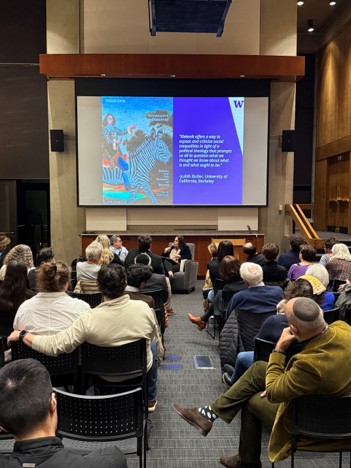
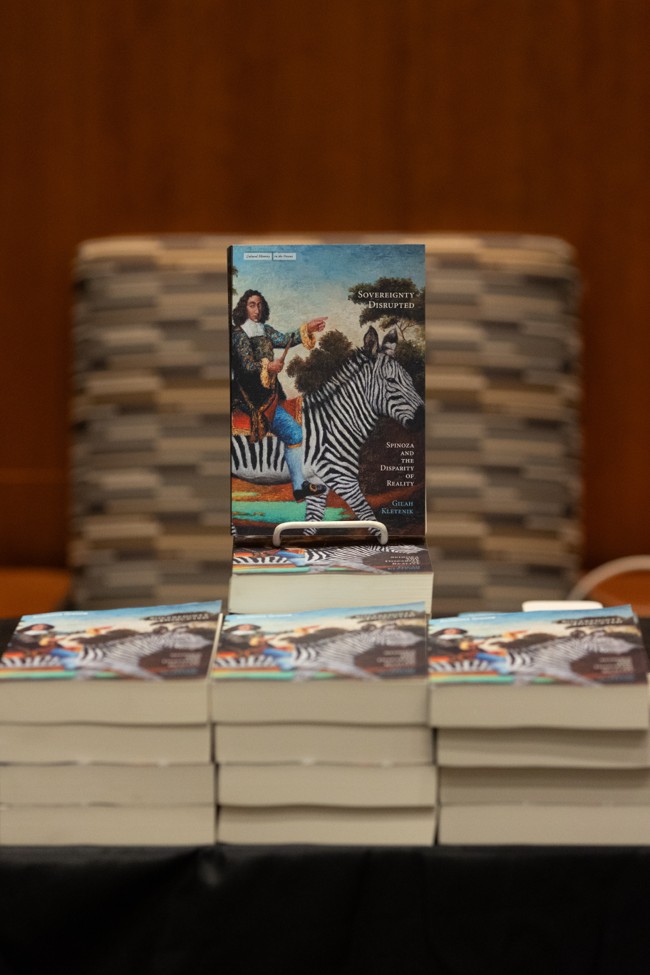
The series kicked off in October with a celebration of the Stroum Center’s Hazel D. Cole Postdoctoral Fellow, Gilah Kletenik, whose new book Sovereignty Disrupted: Spinoza and the Disparity of Reality was published by Stanford University Press.
In this book, Kletenik thinks with Spinoza to provide a hopeful reimagining of philosophy for the current day. During our book launch, Kletenik was joined by Stroum Center Director, Noam Pianko; together they discussed how Jewish philosophy can be applied today. Our packed house enjoyed much laughter and insights, as well as a kosher reception.
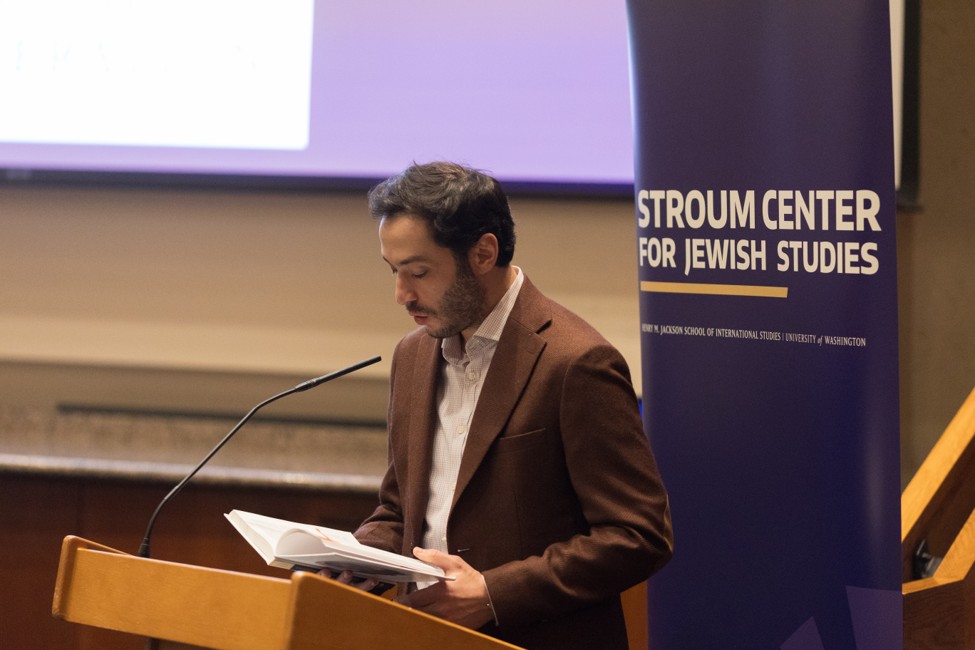
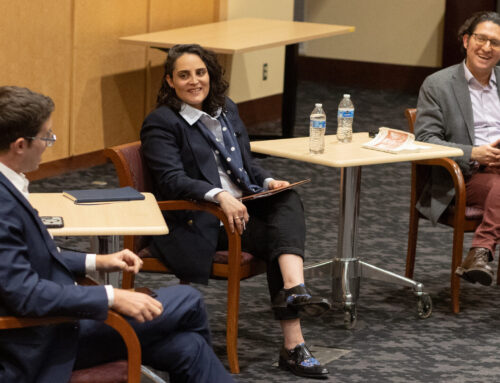
Mark Letteney reading from Ancient Mediterranean Incarceration. Image courtesy of Meryl Schenker Photography
In January, we hosted a book talk and reception for Professor Mark Letteney’s new book Ancient Mediterranean Incarceration, co-authored with Matthew D.C. Larsen and published by University of California Press. In his review of the book in The New Yorker, Adam Gopnik raved, “What lingers with us after reading this book is…the idea of a common humanity is not an invention that separates us from the ancients but an inheritance that connects us to them. It’s what makes the dialogue of the dead a conversation among the living.” Letteney was joined by Joel Walker (Stroum Center, History) and Sarah Levin-Richardson (Classics), who fielded questions, especially from many of Professor Letteney’s students in attendance.
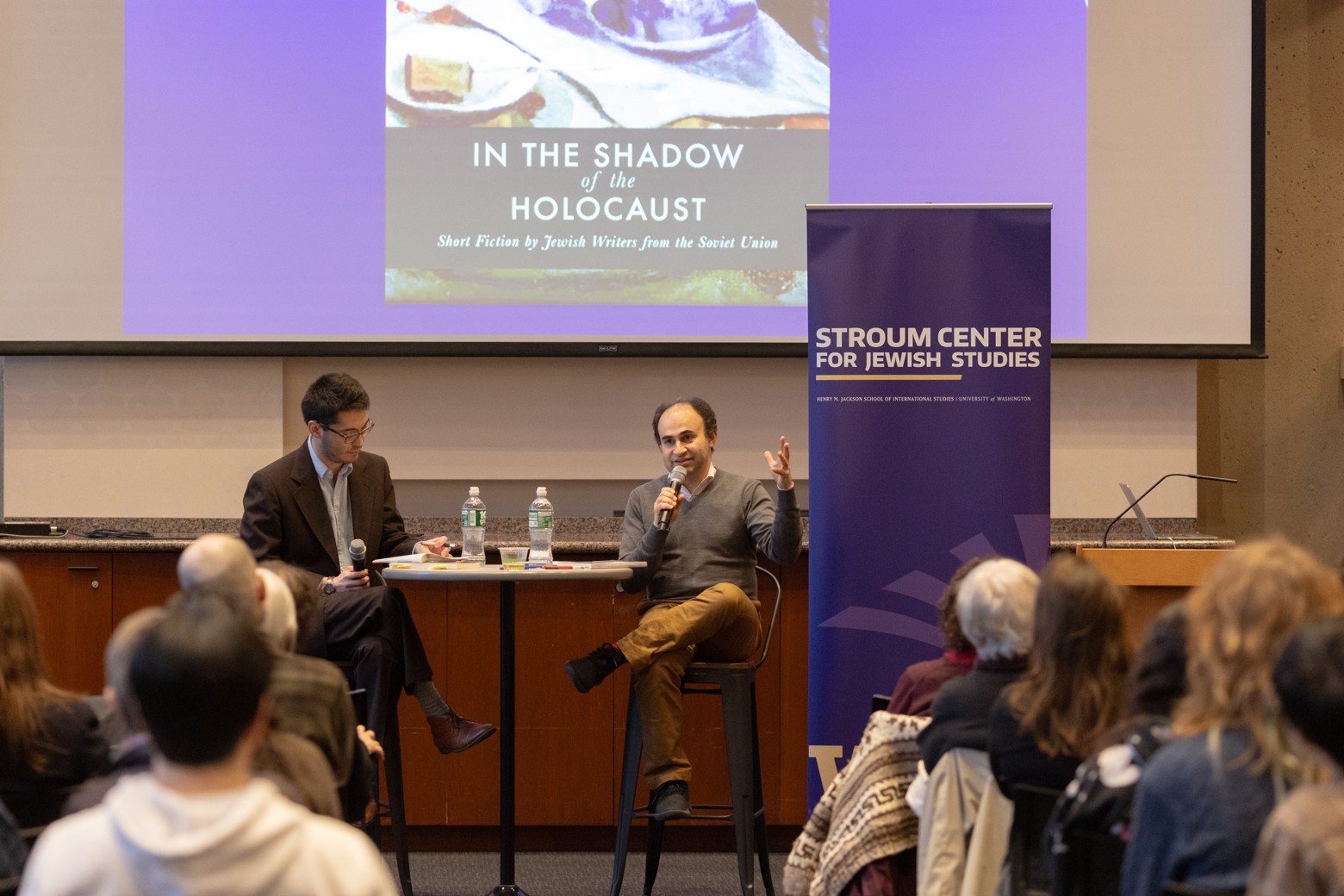
Ben Lee and Sasha Senderovich (L-R) in conversation in March. Image courtesy of Meryl Schenker Photography
Our series concluded in March with a celebration of a new book of short stories curated and translated by faculty member Sasha Senderovich, In the Shadow of the Holocaust: Short Fiction by Jewish Writers from the Soviet Union. The book was co-edited and translated by Harriet Murav and published by Stanford University Press.
Professor Senderovich was joined by Stroum Center faculty and iSchool professor Ben Lee to discuss how these short stories, and the act of translating them, opened new ways of thinking about Holocaust literature, Soviet Jewish history, and the long, uneven afterlives of mass violence.
Gallery
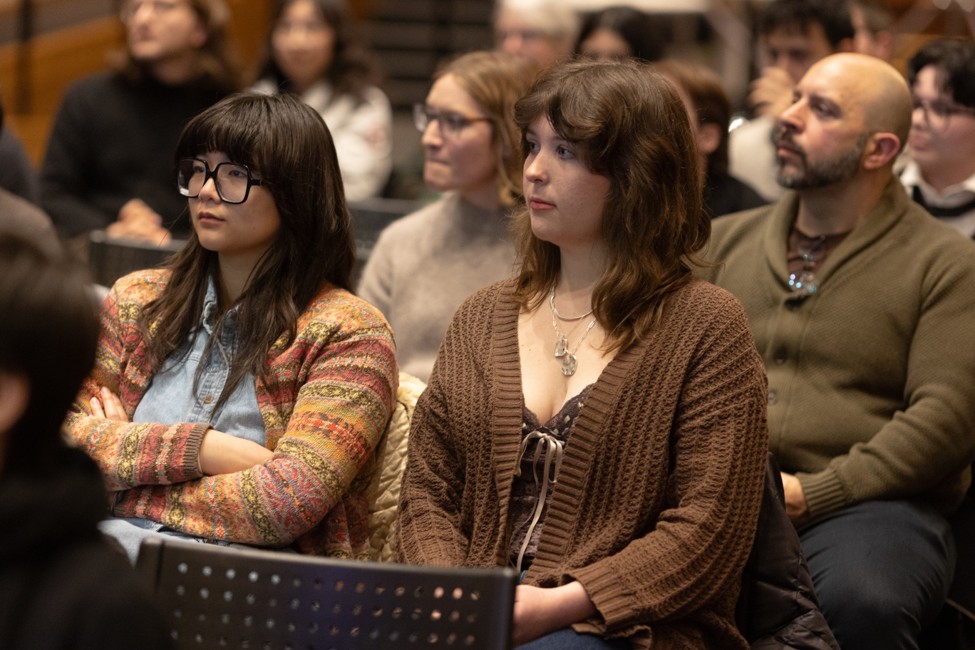
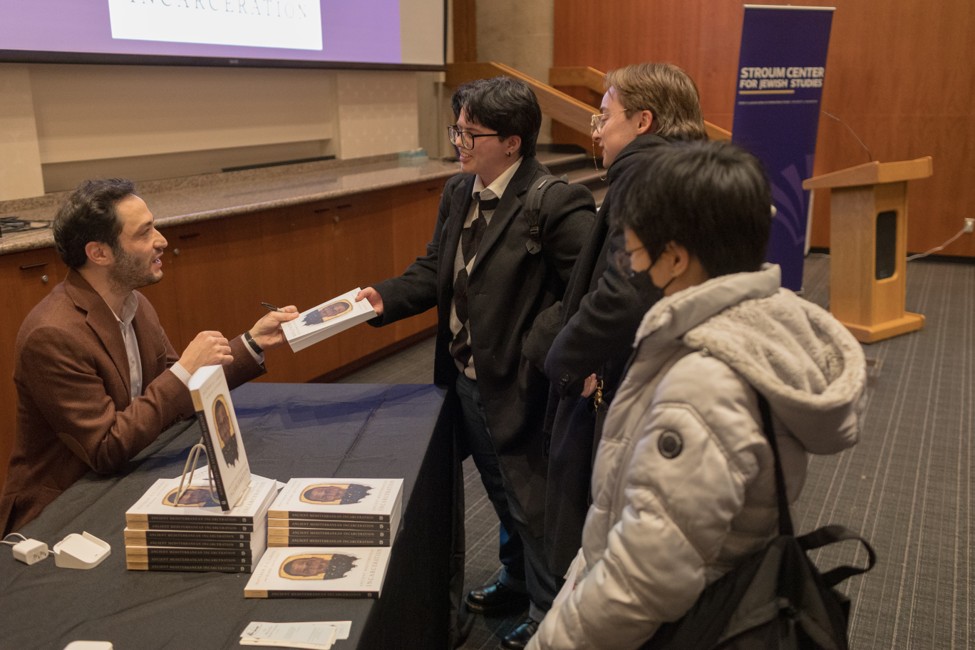
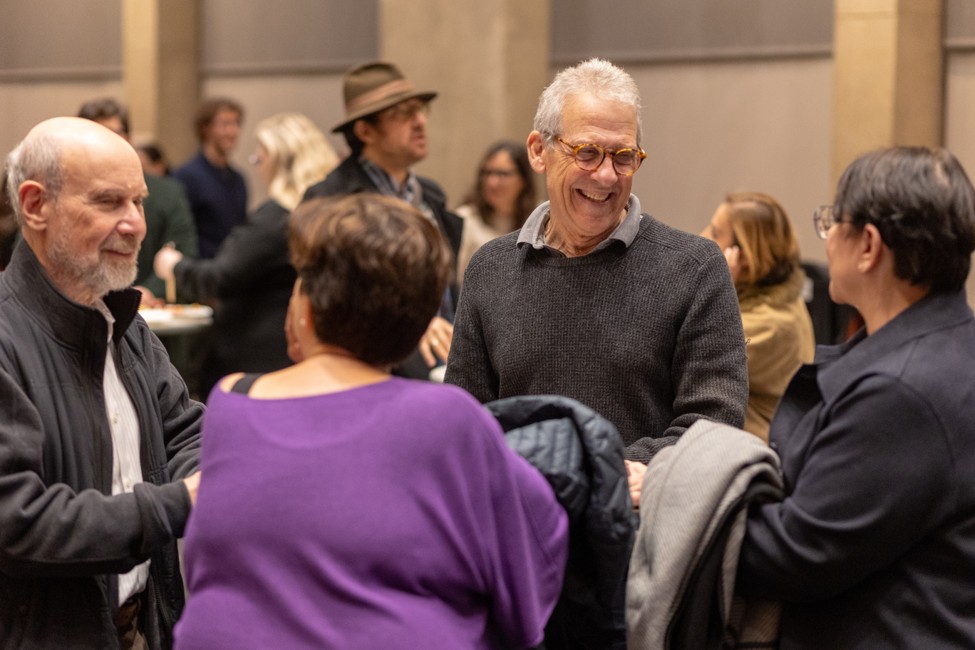
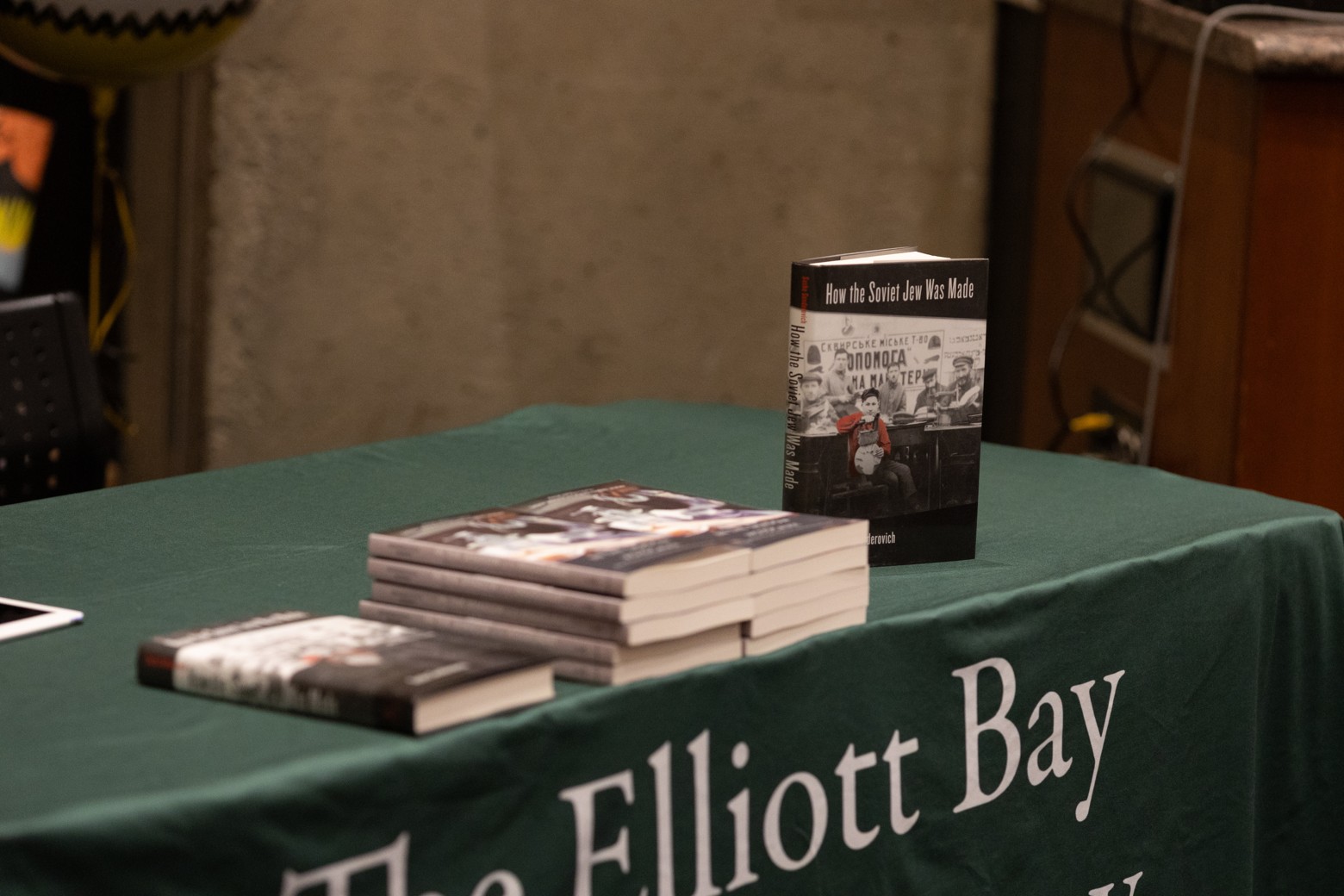
Images courtesy of Meryl Schenker Photography