
Exploring the Unexpected in Ancient Jewish Culture with Rafael Neis
Rafael Neis By Madison Morgan For more than 50 years, the Stroum Center for Jewish Studies has welcomed leading voices in the field
Rafael Neis By Madison Morgan For more than 50 years, the Stroum Center for Jewish Studies has welcomed leading voices in the field
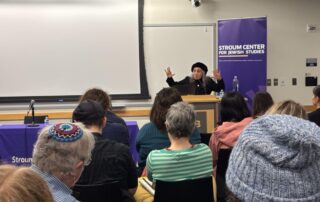
Miriam Udel speaks at the Jan. 28 lecture “Umbrella Sky – Modern Jewish Worldmaking Through Yiddish Children’s Literature.” Photo by Madison Morgan By
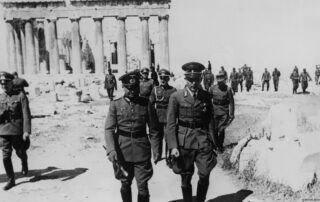
Nazi-translated documents in a Jerusalem archive reveal how the Rosenberg Task Force looted and repurposed Greek Jewish records during World War II. By Joana Bürger
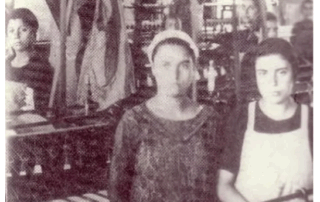
Alexandra Ritsatos writes on the activism of Regina Roza, a Sephardic tobacco worker in 1930s Salonika, whose leadership in labor strikes reveals the erased
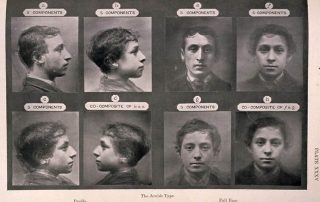
Before eugenics became infamous, the movement to select and control human reproduction "to suppress defective classes" was popular among American liberals and progressives — including Jews. Graduate fellow Ari Forsyth explains.
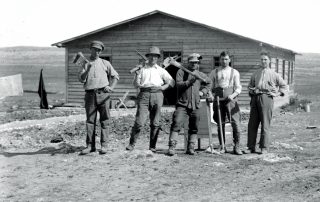
Dr. Alan Dowty analyzes various aspects of Israel's past and present to determine that it is not a settler colonial state, at least not by the usual definition.
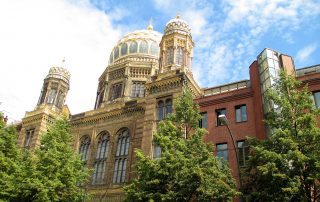
Ph.D. candidate Katja Schatte explains how ideas of Jewishness gradually expanded in the German Democratic Republic (East Germany) starting in the mid-1980s.
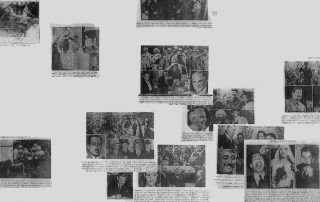
Graduate fellow Ben Lee explains how machine learning can help historians to learn from the photographs, illustrations and advertisements found in Ladino-language newspapers.