
Synchronization, Assimilation, Decay, and the Jews of China
How did Jewish communities in China change over time? Graduate Fellow Micah Sprouffske looks at words with Chinese and Jewish roots in the stele outside the Kaifeng Synagogue.
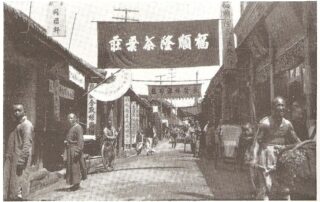
How did Jewish communities in China change over time? Graduate Fellow Micah Sprouffske looks at words with Chinese and Jewish roots in the stele outside the Kaifeng Synagogue.

Explore the remarkable story of the Kadoorie family, whose philanthropy connected Jewish communities from Baghdad to Hong Kong and shaped modern Asia.
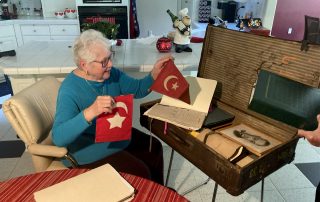
While researching Jewish refugees of Nazi Germany, graduate fellow Joana Bürger uncovered the incredible story of a Sephardi-Catholic-German-Turkish family's survival during the Holocaust.
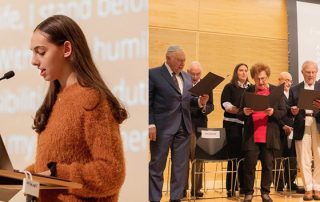
On the tenth anniversary of Ladino Day, UW's Sephardic Studies Program presents four experts from different generations, all working to revitalize Ladino (Judeo-Spanish), the traditional language of Sephardic Jews.
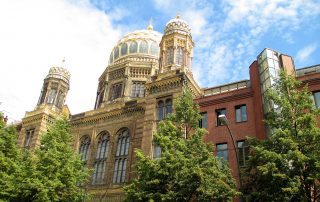
Ph.D. candidate Katja Schatte explains how ideas of Jewishness gradually expanded in the German Democratic Republic (East Germany) starting in the mid-1980s.
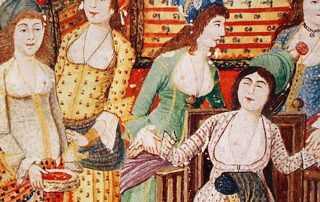
Concern over a shrinking population led Ottoman authorities to undermine reproductive autonomy in the 19th century, writes grad fellow Büşra Demirkol, starting with outlawing abortion and exiling two "bloody" Jewish midwives.
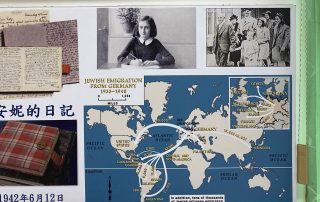
Graduate fellow Eryk Waligora explains why Holocaust education matters on a global scale by looking at the case of Taiwan — a country with a painful past of its own to contend with.
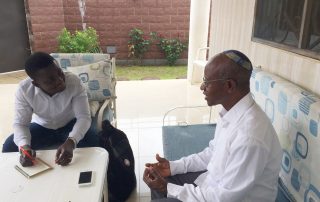
Graduate fellow Francis Abugbilla tells the story of C'ôte d'Ivoire's young Jewish community, and its efforts to promote peace in a country recovering from multiple civil wars.