
How Franz Kafka connected with Yiddish language and theater in Prague
Though he wrote in German, author Franz Kafka became an enthusiastic supporter of Yiddish theater in Prague. Graduate fellow Aaron Carpenter tells the story.

Though he wrote in German, author Franz Kafka became an enthusiastic supporter of Yiddish theater in Prague. Graduate fellow Aaron Carpenter tells the story.

The history of American-supported development in Mandate Palestine is an early example of the complicated relationship between American Jews and Israel, writes graduate fellow Jake Beckert.

Ph.D. candidate Katja Schatte explains how ideas of Jewishness gradually expanded in the German Democratic Republic (East Germany) starting in the mid-1980s.
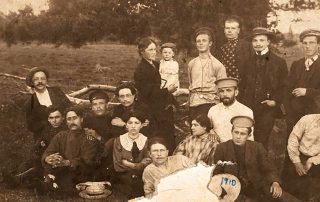
Graduate fellow Shelby Handler shares the history of the General History Labor Bund, the 20th-century Jewish socialist organization that inspired her new collection of poetry.

Benjamin Netanyahu was known for strengthening ties between Israel and Africa. Will Israel's new government follow the former prime minister's lead? Grad fellow Francis Abugbilla explains the situation.
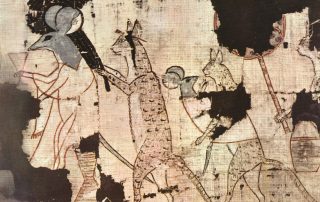
Looking at ancient texts' "topsy-turvy" visions of the world can reveal a lot about the authors' assumptions, writes grad fellow Forrest Martin.

Graduate fellow Lili Brown explains how community archives — community-centered archives that preserve all kinds of documents and materials — help researchers to construct richer pictures of the past, and how this approach is helping to preserve Seattle Sephardic history.
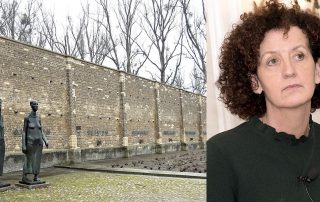
Like German-language Jewish writers, ethnic Slovenian author Maja Haderlap struggles with the language of the Nazis in telling the story of her community's persecution in Austria, writes graduate fellow Aaron Carpenter.