
Yiddish Lives: Four Scholars, One Language, Many Futures
Portions of the phrase book “Say It in Yiddish” by Uriel Weinreich. Photo courtesy of Angus McDiarmid/Flickr. by Madison Morgan Annegret Oehme was
Portions of the phrase book “Say It in Yiddish” by Uriel Weinreich. Photo courtesy of Angus McDiarmid/Flickr. by Madison Morgan Annegret Oehme was
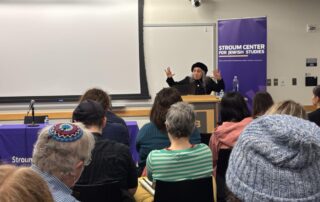
Visiting speaker Miriam Udel brings Yiddish to life by introducing students, faculty, and the public to Yiddish children's literature of the early 20th century.
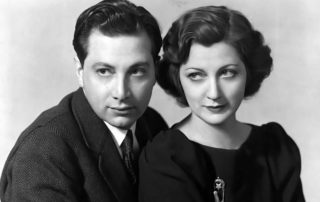
Stella Adler, famous mid-century actress and one of the United States' foremost acting instructors, had deep ties to the Yiddish theater scene in New York City. Graduate fellow Amna Farooqi explains.
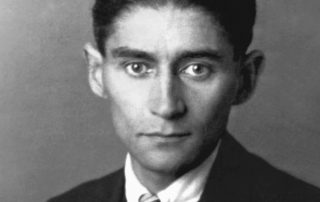
Though he wrote in German, author Franz Kafka became an enthusiastic supporter of Yiddish theater in Prague. Graduate fellow Aaron Carpenter tells the story.
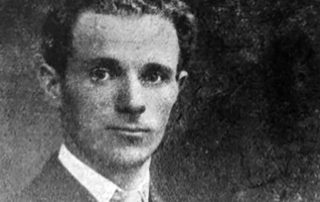
Yitzhak Löwy, future head of a Yiddish theater company, explains how his fascination with theater developed in spite of his parents' disapproval. Circa 1917, translated from German by Aaron Carpenter.

Annegret Oehme shares the stories of the nearly forgotten Yiddish knights' tales that inspired centuries of storytellers, both Jews and non-Jews alike.
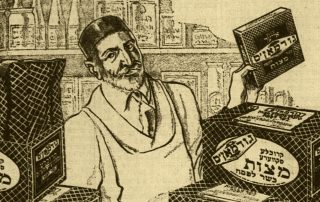
Matsa ads from American Ladino and Yiddish newspapers compel us to reconsider Jewish food history in the United States.
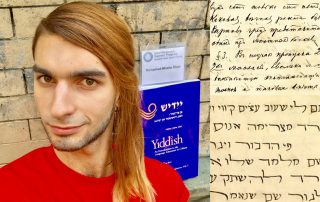
Opportunity Grant winner Moshé Elias explains why he chose to study Yiddish, and what he discovered when he did.